Loading

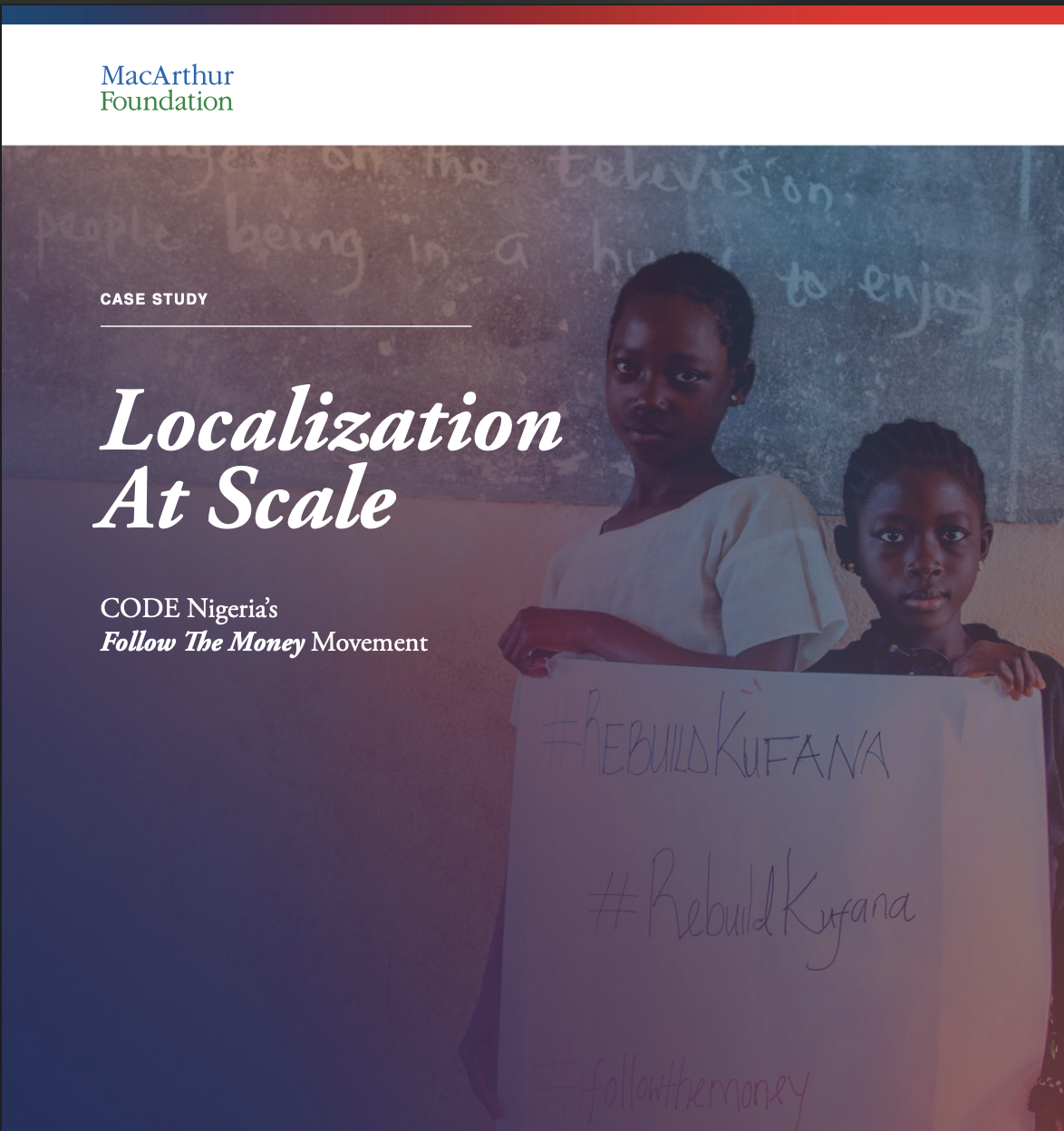
Localization At Scale: CODE Nigeria’s Follow The Money Movement

Communications 3 March 2025 0

One of the most daunting challenges in neglected communities around the world is the accountable delivery of public goods and services. This situation is even more dire in rural areas because communities that are more visible and networked often receive goods and services that less accessible communities don’t. However, the funds earmarked for these communities still need to go somewhere. Instead of reaching their intended recipients, funds allocated to rural communities are routed elsewhere, often toward the personal interests of government officials or other non-essential expenditures that do not respond to the primary needs of communities.

Download full report here: B. [CODE] Global Case Study

Download full report here: B1. [CODE] ABRIDGED Global Case Study

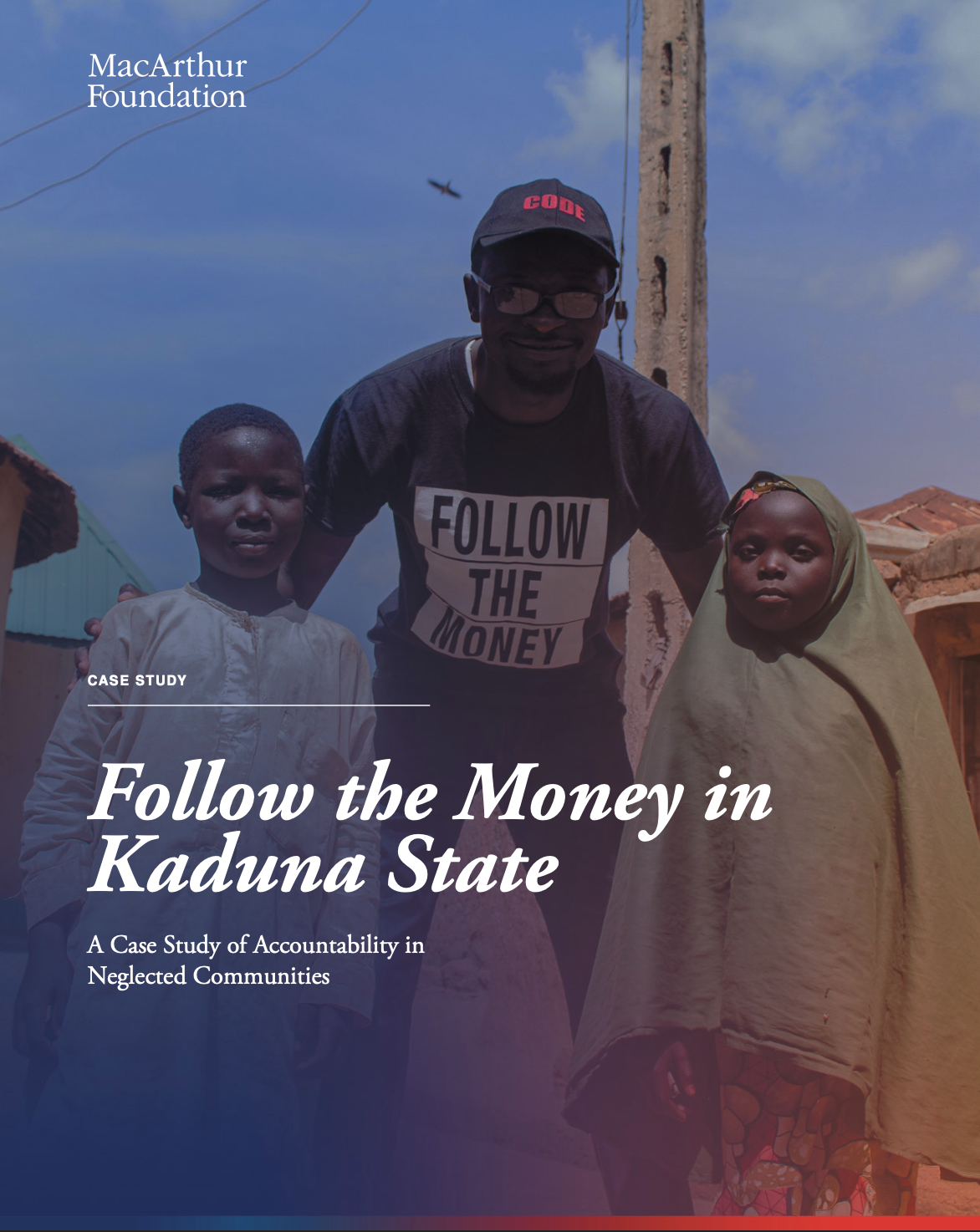
FTM in Kaduna State: A Case Study of Accountability in Neglected Communities

Communications 3 March 2025 0

A Nigerian youth-led organization called Connected Development (CODE) is catalyzing one of the largest social movements in Africa, “Follow The Money” (FTM), which transforms corruption into opportunities for neglected communities by empowering them to demand accountability in the delivery of government goods and services earmarked for their communities. This case study illustrates how the MacArthur Foundation’s investment of USD 350,000 has contributed to FTM’s investigative monitoring and, ultimately, the delivery of USD 1.5 million (570 million Naira) in education infrastructure across Kaduna State alone. Download the full report below.

Download A. [CODE] FTM Kaduna Case Study Here

Download A1. [CODE] FTM Kaduna ABRIDGED Case Study Here

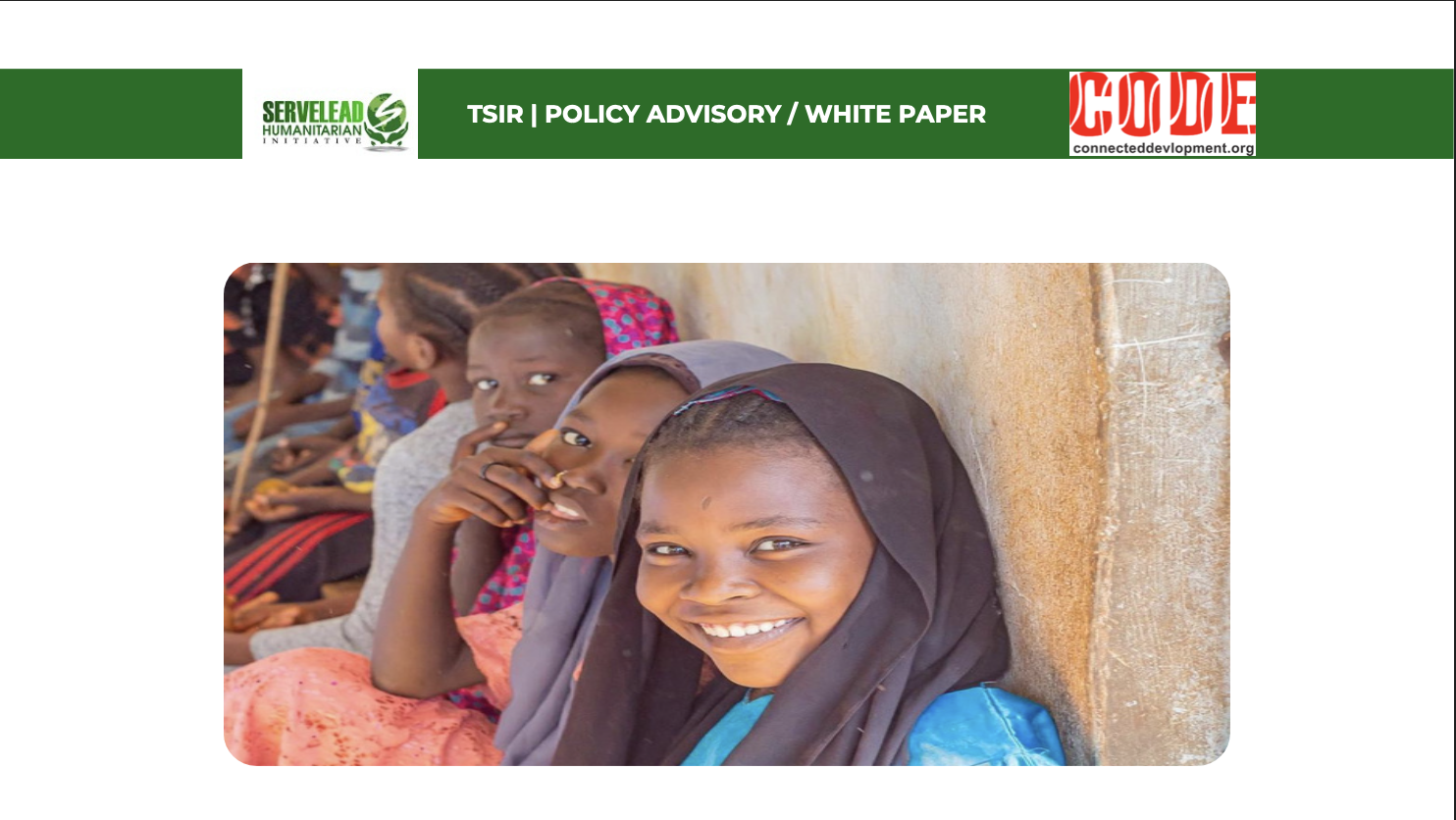
Challenges of Education in Northern Nigeria : A white paper developed for the 2025 social impact roundtable

Communications 25 February 2025 0

Education is a fundamental pillar for national development, yet Northern Nigeria continues to face severe educational challenges that hinder progress and exacerbate socio-economic disparities. This paper examines key barriers to education in the region, including limited access due to inadequate infrastructure, insecurity, and socio-cultural constraints. It also highlights issues of equity, gender disparity, and the impact of the Almajiri system on school attendance. Additionally, the study explores the declining quality of education caused by teacher shortages, outdated curricula, and poor learning conditions. The lack of technology integration and limited vocational training opportunities further hinder students’ preparedness for the modern workforce. See full report below 👇 ⬇️

Breaking the Silence: A Future without Female Genital Mutilation

Ijeoma Oforka 6 February 2025 0

February 6 marks the International Day of Zero Tolerance for Female Genital Mutilation (FGM), a day dedicated to amplifying voices, challenging harmful practices, and advocating for the protection of girls worldwide. This year’s theme, Her Voice, Her Future, resonates deeply with me, as it reminds us of the urgency to listen, act, and protect the rights of girls and women everywhere.

Female Genital Mutilation refers to all procedures that involve the partial or total removal of the external female genitalia or other injury to the female genital organs for non-medical reasons. Despite global efforts, FGM continues to affect millions of girls worldwide, driven by deep-rooted cultural and societal beliefs.

Looking back, my journey in advocating against FGM started in 2005 when I participated in my high school drama, highlighting the disheartening reality of this practice. Even then, as a young girl, I was struck by the pain and injustice inflicted upon so many. Yet, nearly two decades later, we are still riddled with these harmful practices. The statistics are staggering—more than 230 million girls and women alive today have undergone some form of FGM, and millions more remain at risk each year. (UNICEF, 2024). With an estimated 19.9 million survivors, Nigeria accounts for the third-highest number of women and girls who have undergone FGM worldwide. (UNICEF, 2022).  The World Health Organization estimates that treatment of the health complications of FGM is estimated to cost health systems US$ 1.4 billion per year; this clearly shows that there are no health benefits to this practice, only harm.

FGM is not merely a cultural practice; it is a human rights violation with devastating consequences. It is unscientific, uncivilized, utterly callous and barbaric. Girls who undergo this procedure suffer long-term physical, emotional, and psychological trauma. The risks include severe bleeding, infections, complications in childbirth, and even death. Beyond the physical harm, it robs them of autonomy over their bodies and their futures.

In many rural communities, FGM is upheld by deeply ingrained traditions and societal norms. As  I  reflect on the effectiveness of advocacy against FGM in the regions of south-east and south-west where it is prevalent, I’m left to ask, are we genuinely reaching the most vulnerable? Are policies and interventions translating into real change?

The government and organizations have taken steps to combat FGM, yet implementation gaps remain. Laws exist, but enforcement is weak. Awareness campaigns are launched, but cultural resistance persists. For real change to happen, we must move beyond policies on paper and focus on grassroots engagement.

The fight against FGM is not just for activists or policymakers but for all of us. We must empower survivors, amplify their voices, and challenge societal norms that perpetuate this violence. It is time to stand with the millions of girls at risk and ensure that their voices shape a future free from harm.

Her voice matters. Her future is worth fighting for.

Together, we can end FGM—once and for all.

The State of Climate Finance in Nigeria

Communications 20 January 2025 0

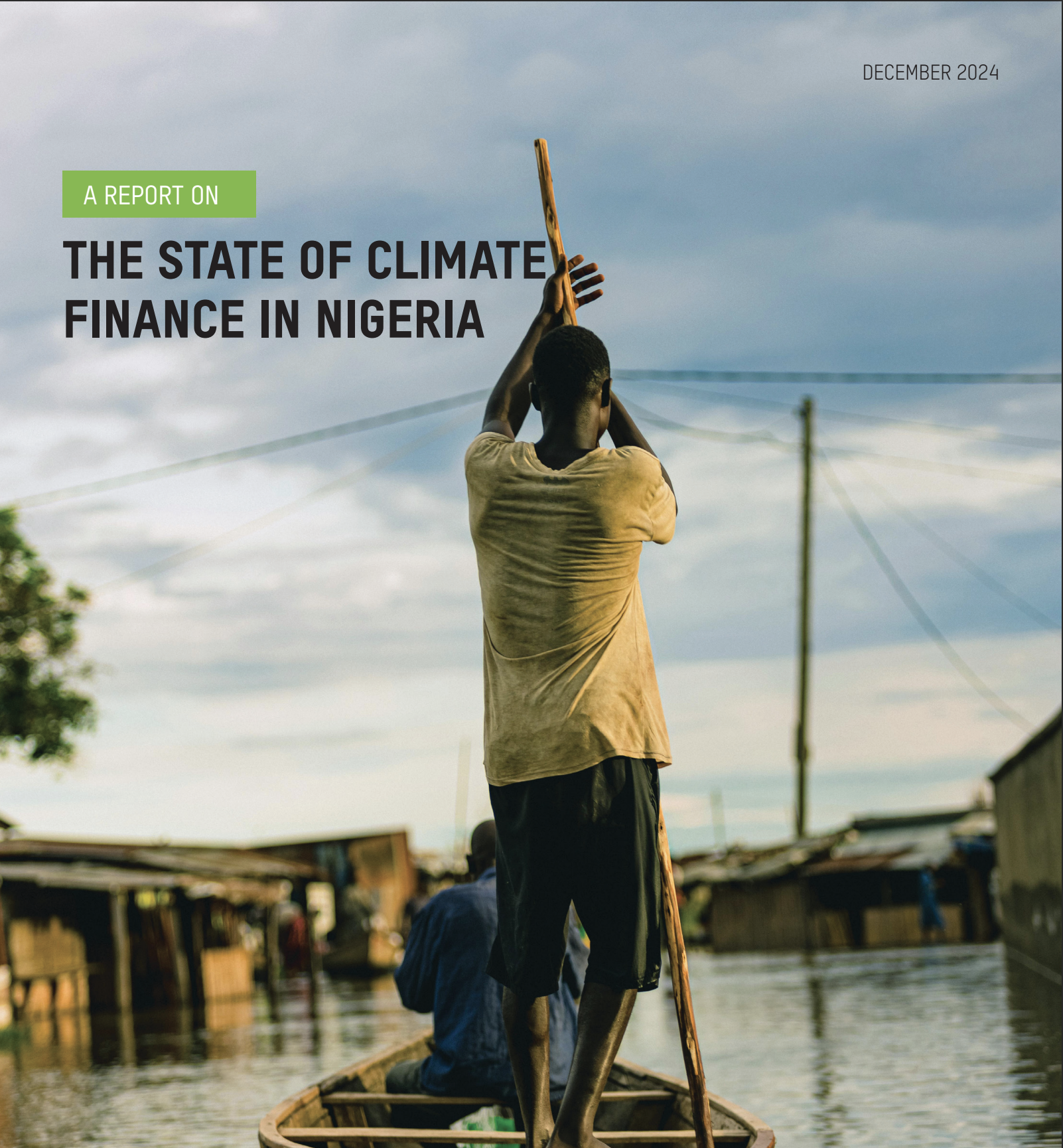
This report is conducted by Connected Development (CODE) in partnership with INKA Consult from Denmark. It provides an overview of international climate finance for Nigeria from 2015 to 2021. The study also looks at the climate finance management system and evaluates the participation of citizens and civil society in climate finance planning and monitoring in Nigeria… Click the links below to download full reports

The State of Climate Finance in Nigeria

Executive Summary State of Climate Finance in Nigeria

Fact Sheet State of Climate Finance in Nigeria

Beyond the 16 Days! Sustaining Actions for Change

Titus Tukurah 9 December 2024 0

By Ruth Okafor

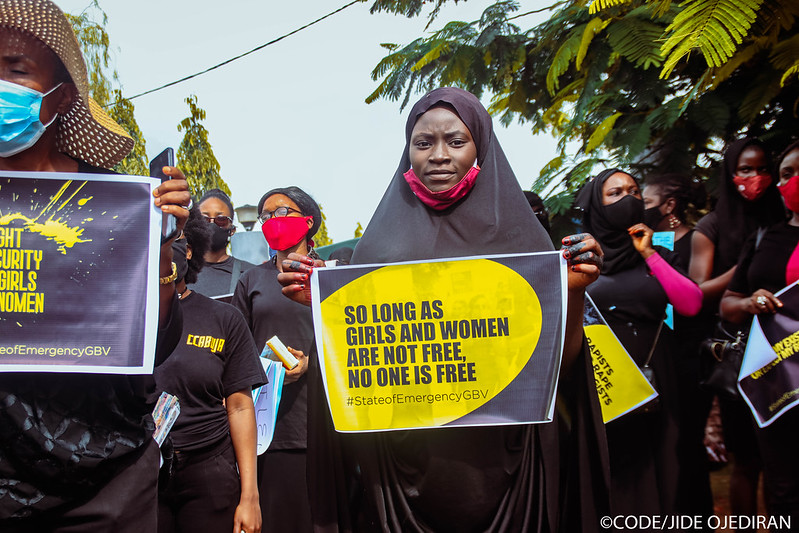
Each year, the 16 Days of Activism Against Gender-Based Violence serves as a distressing reminder of the ongoing struggle to eradicate violence against women and other vulnerable groups worldwide. Reflecting on this initiative, it is clear that our commitment must extend beyond these 16 days. While efforts in awareness, policy formulation, and implementation have advanced, the gruesome stories of violence remind us of the work still needed. These cases emphasize the urgency for action and concrete steps to address gender-based violence (GBV) globally.

That said, I must reiterate that the global observance of the 16 Days of Activism is not just a ceremonial marking on the calendar; it represents an essential effort to intensify awareness and generate momentum for ending the scourge of gender-based violence. This period is a call to elevate the voices of survivors and galvanize actionable change that resonates beyond these days. However, to bring about substantial and lasting change, activism must transcend these symbolic observances and become a constant pursuit of justice and equality.

Notably, this year alone has seen heartbreaking stories from around the globe that reiterate the need for a constant reminder of the societal menace of gender-based violence. 

For instance, there was a case involving a 17-year-old girl who was detained for allegedly receiving stolen property and was subsequently raped by a law enforcement officer in Edo State, Nigeria. Imagine an enforcer of the law forcing himself on a 17-year-old girl.

Additionally, we mourned the tragic loss of Ugandan Olympic athlete Rebecca Cheptegei, who was killed by her partner, reminding us of the deadly consequences of intimate partner violence.

Another saddening case is that of Gisela Pericot, who was raped and drugged multiple times by her husband and other men. Gisela’s public declaration against victim shaming marks a pivotal moment in the fight against gender-based violence, emphasizing the need to shift the narrative of shame toward perpetrators rather than survivors.

These are only a few reported cases; many others go unreported due to stigma and lack of trust in the justice system. This highlights the urgent need for systemic change. Furthermore, cultural norms can silence survivors, preventing them from seeking help or justice. Overcoming these barriers is essential to empower victims to speak out. This underscores the necessity for greater awareness and concrete actions by stakeholders. They must make commitments that translate into sustainable policies and actions. 

How can we sustain momentum beyond these 16 Days?

  1. Accountability and Follow-Up: Every year, numerous commitments are made by various stakeholders, especially government and community leaders. We must ask clear-cut questions to track progress and accountability to ensure they uphold these commitments made during activism events. Specific, timely reminders and monitoring systems should be prioritized to keep commitments in focus. This could involve civic organizations and active citizens demanding accountability through quarterly evaluations of policy implementations or changes.
  2. Promote Local Engagement: As a believer in local solutions to solve global challenges, fostering community-driven initiatives that address cultural and contextual aspects of gender-based violence will further dismantle existing harmful beliefs. Strengthening local government involvement is crucial for sustaining dialogue and preventive measures at the grassroots level. Engaging Religious and Traditional leaders to take charge in addressing these issues will facilitate a bottom-up approach to societal change, significantly aiding in eliminating various forms of violence in our society.
  3. Support Victim-Centric Solutions: Creating safe spaces where survivors are heard, believed, and supported without being judged. Amplifying their voices and prioritizing their needs in policy discussions is essential. Encouraging media narratives that highlight stories of resilience while demanding justice for survivors—rather than perpetuating shame—is crucial.

To effectively combat GBV, we must move beyond campaigns and slogans to implement year-round, actionable strategies that address the SYSTEMIC causes of GBV. Which include community education and awareness; technology for safety, and breaking the cycle of silence. Not forgetting that in addressing GBV strict accountability for perpetrators is required which must include; 

  • Swift Justice for survivors
  • ⁠Rehabilitation Programs for 
  • Public Registers for perpetrators
  • Zero Tolerance in Institutions

Finally, we must always remember that GBV is not insurmountable; it requires collective will and continuous action from everyone to overcome it. Beyond the 16 Days of Activism, we must commit to a future where safety, dignity, and justice for all are non-negotiable. Every voice matters in shaping this change—your voice can be the difference. Stand with survivors! Let us move from commitments to actionable plans as a society.

State of Social Amenities in Nigeria

Communications 29 October 2024 0

Nigeria continues to contend with challenges of accountability, resource allocation, and service delivery, despite significant investments in education, health, and social sectors. These sectors are crucial for sustainable development, yet they suffer from inefficiencies, corruption, and a lack of transparency. According to UNICEF, over 10.5 million children are out of school in Nigeria, representing one of the highest rates in the world. Even with increased budget allocations, Nigeria’s education sector faces significant challenges, including inadequate infrastructure, low teacher quality, and high school dropout rates.

The healthcare system in Nigeria is plagued by issues such as poor funding, a shortage of medical personnel, brain drain, poor staff funding and inadequate facilities. The World Bank reports that Nigeria has one of the highest maternal mortality rates globally, with 814 deaths per 100,000 live births in 2020. Social programs aimed at reducing poverty and inequality often suffer from mismanagement and lack of accountability. For instance, the NSEG report (2019) shows that the National Social Investment Program (NSIP) has faced criticism for inefficiencies and corruption, which undermine its effectiveness in alleviating poverty.

Girl Child Education Project: Call For Mentors

Communications 26 September 2024 0

Job description 

Girl Child Mentor Volunteer 

Location 

Bauchi state (Alkeleri, Bauchi, Ningi, and Zaki)

Job type: Per time 

This is a 3-year contract. 

Reports to  the project manager

Organizational Background

Connected Development [CODE] is Africa’s leading civil society organization whose mission is to empower marginalized communities in Africa. We strengthen local communities by creating platforms for dialogue, enabling informed debate, and building capacities of citizens on how to hold their government accountable through the Follow The Money project. CODE provides marginalized and vulnerable communities with resources to amplify their voices with independence and integrity while providing the communities with information that ushers social and economic progress. To enhance effective democratic governance and accountability, CODE creates platforms [mobile and web technologies] that close the feedback loop between citizens and the government. With global expertise and reach, we focus on community outreach, influencing policies, practices, and knowledge mobilization. 

With support from the Malala Fund, CODE is implementing a three-year Girl-Child Education Project (GEP) in Bauchi State which aims to enhance transparency and accountability in Bauchi State’s education sector by adopting a citizen oversight model. 

As part of the project objectives,  CODE is calling for girl child mentors to empower girls by assigning them to female mentors who will guide them in becoming advocates for girls’ education and help them develop digital, social, and life skills, for three years. The training will be done 16 times a year. 

Responsibilities of the mentor 

  1. Enhanced advocacy for girls’ education by the mentees
  2. Improved digital, social, and life skills among participating girls
  3. Successful implementation of quarterly micro-mini projects
  4. Measurable improvement in girls’ education based on annual assessments
  5. Positive Behavioral Changes: Improved behavior, including greater focus, discipline, and resilience in facing challenges.
  6. Submission  of report on meetings, progress, and projects
  7. Compile an annual assessment report highlighting the program’s impact and areas for improvement.

What you bring to the team 

  1. Experienced female professionals with a background in education, social work, or digital skills
  2. Excellent communication and writing skills
  3. Ability to impact functional skills and knowledge 
  4. The availability and willingness to regularly interact with the mentee
  5. Provide truthful and constructive feedback
  6. Maintain authenticity in actions and values
  7. Reflective in decisions and guidance
  8. Identify and nurture the mentee’s potential, encouraging growth
  9. Maintain a positive attitude towards challenges and opportunities
  10. Establish and nurture strong mentor-mentee relationships
  11. Help set realistic goals and objectives for the mentee’s development
  12. Hold the mentee accountable for progress and tasks
  13. Demonstrate patience in guiding the mentee through their development journey
  14. Understand and respect diverse cultural backgrounds
  15. Demonstrates qualities and behaviors that set a positive example for the mentee
  16. Models a healthy balance between work and personal life

Protecting vulnerable communities from the escalating and recurring climate crisis is an urgent appeal to the Nigerian government and the international community.

Communications 11 September 2024 0

As Nigeria faces yet another wave of devastating floods, with the recent disaster in Maiduguri on September 9th  2024 it has become abundantly clear that the country’s flood management systems are failing to protect our most vulnerable communities.  The cycle of reacting only after a flood occurs, instead of preparing and implementing long-term flood prevention measures, reveals a systemic failure in planning and resource allocation. This catastrophe serves as a stark reminder of the ongoing environmental crises we have consistently raised alarms about through the Community Media Collaboration for Climate Justice (CMCCJ) project and other transparency and accountability initiatives.

We watch as the lives of women, children, and whole families in Maiduguri and elsewhere get turned upside down by this disastrous flooding. We urge immediate and sustained action by the Nigerian government and the international community. Our work in Rivers and Akwa Ibom states, alongside a powerful documentary emphasizing the vulnerability of communities during past environmental disasters, shows without a doubt the need for urgency in action and long-term planning to mitigate these preventable losses. Flooding is a predictable and preventable disaster, yet the focus remains on post-disaster management. This annual tragedy serves as a sobering reminder that there are no geographical limits to the environmental crisis. it is indeed possible to protect lives and livelihoods through proactive engagement, community-driven solutions, and openness in government action. But we must act now before another disaster strikes.

Key Challenges

1. Inadequate Early Warning Systems: The absence of a reliable early warning system in many parts of Nigeria means communities are often caught off guard, despite the likelihood of floods being known well in advance due to seasonal patterns. 

2. Inadequate Flood Prevention and Response Systems: Despite commitments from the government and stakeholders following our documentation of the 2022 floods in Rivers State, effective flood prevention measures remain elusive. Vulnerable populations, especially women, children, and internally displaced persons (IDPs), continue to bear the brunt of these disasters.

3. Lack of Transparency and Accountability: Through our advocacy work, we have tracked funds such as the Climate Change and Ecological Fund, revealing the mismanagement and lack of transparency in disbursements for climate resilience projects. The recent floods only further show that it is imperative that these funds are properly allocated and monitored.

4. Breakdown and/or absence of infrastructure: The continued deficiency in government provision of infrastructure as well as poor maintenance of existing ones like dams that collect excess water has exacerbated the risk of flooding across communities in Nigeria.

5. Neglect of Marginalized Communities: Our work with community based organizations has consistently shown that marginalized groups, particularly women and youth, are the most affected by environmental disasters, yet they are the least consulted in the design and implementation of climate adaptation policies.

Call to Action

We call upon the Nigerian Government and the international community to take swift and decisive action to address the recurring flood crises and the broader climate emergency by adopting the following measures:

​1.​Immediate and Transparent Use of Climate and Ecological Funds: The climate change and ecological funds must be immediately mobilized to support flood relief efforts in Maiduguri and other affected regions. The government should ensure that the funds are utilized transparently, and all disbursements must be tracked and reported to the public.

​2.​Increased Funding for Climate-Resilient Infrastructure: We urge the Nigerian government, along with international partners, to prioritize the development of climate-resilient infrastructure in flood-prone areas. This includes the construction of dams, maintenance and expansion of existing dams, improved drainage systems, and sustainable housing for communities at risk of displacement.

​3.​Community-Led Solutions and Empowerment: Local communities, especially women and youth, should be empowered and supported to lead climate resilience efforts. This can be achieved through capacity building programs, the establishment of Community Reading Centers (CRCs) for awareness on environmental protection, and the mobilization of community based organizations to monitor government action on flood prevention.

​4.​International Support and Solidarity: We call on the international community to step in with both financial and technical support to address Nigeria’s climate/environmental challenges. Given the scale of devastation, international aid agencies and global climate funds should focus on flood relief and long-term climate adaptation strategies in Nigeria.

​5.​Holding Stakeholders Accountable: All levels of government, including local and state authorities, as well as corporations operating in flood-affected areas, must be held accountable for their role in exacerbating environmental vulnerabilities. This includes companies like Shell Plc, whose operations have contributed to environmental degradation in the South-South region as well as officials of the government found culpable of not maintaining the Alau dam  in Borno state as the Federal government through the Federal Ministry of Water Resources and Sanitation on October 12th 2023, committed to rehabilitating the collapsed 112 million reservoir capacity of the Dam in the state There is also a 78,210,989 Million Naira earmarked for Dam Safety Monitoring and another 159,403,663 Million Naira for Dams and Reservoir Operations Surveillance programme among others in the 2024 Federal Ministry of Water Resources’ budget. How has this been utilised?

The moment is now for immediate action! With the latest floods sweeping across Maiduguri, we are witnessing once again, the failure to adequately prepare for and respond to these climate disasters. While we applaud NEMA’s efforts to collaborate closely with state emergency management agencies and other relevant stakeholders through the National Emergency Operations Centre located in the Agency’s headquarters to ensure that necessary support, including rescue and relief operations, is available to affected communities. These steps are insufficient in the absence of long-term, inclusive solutions that prioritise the well-being of those affected.

CODE stands by the communities we have worked with in Rivers and Akwa Ibom States and extends our support to those currently suffering in Maiduguri. It is time for the Nigerian government and the international community to commit to lasting change and ensure that the voices of the most vulnerable are heard and their lives protected.

Transforming Education in Bauchi: CODE’s GEP-BAUCHI Initiative

Communications 26 August 2024 0

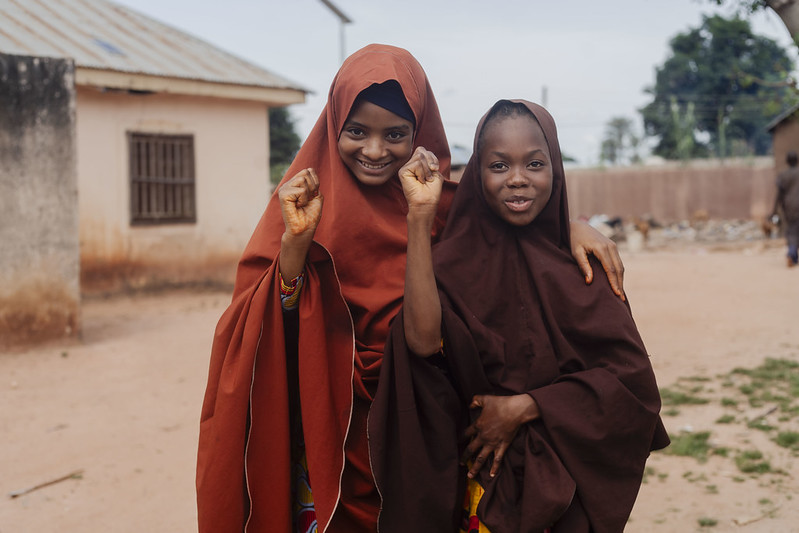
Connected Development (CODE) is implementing the Girl Child Education Project (GEP), sponsored by the Malala Fund, to revolutionize girls’ education in Bauchi State, Nigeria. This project aims to tackle the persistent challenges that have hindered girls’ access to quality education, including high dropout rates, inadequate infrastructure, and a lack of qualified teachers.

One of the key objectives of the GEP is to strengthen collaborations between the government and citizens to implement a transparent and accountable management approach for the State Education Accounts (SEA). The SEA provides a snapshot of education expenditures from public, private, and donor sources, and CODE seeks to make this process more citizen-driven.

By adopting the FollowTheMoney model, CODE empowers citizens to provide oversight functions on government expenditure, ensuring that funds are allocated and utilized effectively. This collaborative approach not only enhances transparency but also builds trust between the government and the people.

.

Addressing Barriers to Girls’ Education

Another crucial aspect of the GEP is its focus on addressing traditional and societal barriers that hinder girls’ access to education. The project aims to enhance enrollment, retention, completion, and transition rates for girls in secondary education by applying a gender-responsive education framework.

CODE recognizes that traditional practices and societal attitudes can significantly impact girls’ educational outcomes. The GEP seeks to create an environment that supports and encourages girls to pursue their educational aspirations by engaging with key stakeholders and fostering gender-inclusive practices.

.

Aligning with Gender-Responsive Education Sector Planning
To ensure the sustainability and effectiveness of its efforts, the GEP aligns with Bauchi state’s Gender-Responsive Education Sector Planning and Budgeting. This approach involves key stakeholders in decision-making and ensures that gender-responsive strategies are integrated into the education system.

By aligning with this framework, GEP-BAUCHI aims to create a more inclusive and equitable education system that addresses the specific needs and challenges faced by girls in Bauchi State.


Expected Outcomes

Through the GEP, CODE expects to achieve the following outcomes:

1. Increased transparency and accountability in the education sector through citizen-driven oversight.

2. Improved accessibility, retention, and completion of 12 years of free, quality education for girls in Bauchi State.

3. Enhanced collaboration between the government and citizens in the management of education resources.

4. Adoption of gender-responsive education policies and practices that support girls’ education.

The GEP represents a significant step forward in the fight for girls’ education in Bauchi State. By fostering collaboration, enhancing accountability, and addressing societal barriers, CODE aims to create a more equitable and inclusive education system that empowers girls to reach their full potential. Through sustained efforts and the commitment of all stakeholders, the GEP has the potential to transform the educational landscape in Bauchi State and serve as a model for other states in Nigeria.