What a Climate Negotiation Workshop Taught Me: Climate Finance Isn’t Just About Money
 Communications
27 August 2026
Communications
27 August 2026

Loading
Communications
27 August 2026
By Onyemaizu Fortune, Junior Data Analyst
Say the word COP to most people, and they picture the same scene: world leaders in sharp suits, ministers behind name plates, negotiators in vast halls making grand promises about climate change and climate finance. Cameras flash, statements are read, the world watches for a few days, and then it moves on. What almost nobody sees is everything that happens before anyone walks into that room. That is the part I got a glimpse of at a recent workshop on climate finance and COP negotiations, and it completely rewired how I think about the whole process.
I went in expecting to leave with a slightly better grasp of climate finance and how negotiations tend to play out. Instead, I was left with the uncomfortable realisation that I had been thinking about this all wrong. Negotiating at COP is not a moment. It is the tip of an iceberg built over months of quiet, unglamorous preparation. We picked apart what actually happened at the Bonn Climate Change Conference (SB64), traced the groundwork already underway for COP31, and spent real time on why climate finance keeps showing up as one of the thorniest items on every COP agenda.
Here is the part that stuck with me. You cannot stop a community from flooding, help a farmer adopt climate-smart practices, or get a village onto renewable energy with good intentions alone. Every single one of those efforts needs money and technology behind it. That is the whole reason climate finance keeps hijacking the conversation at COP. It is not a side issue. It is the issue underneath most of the other issues.
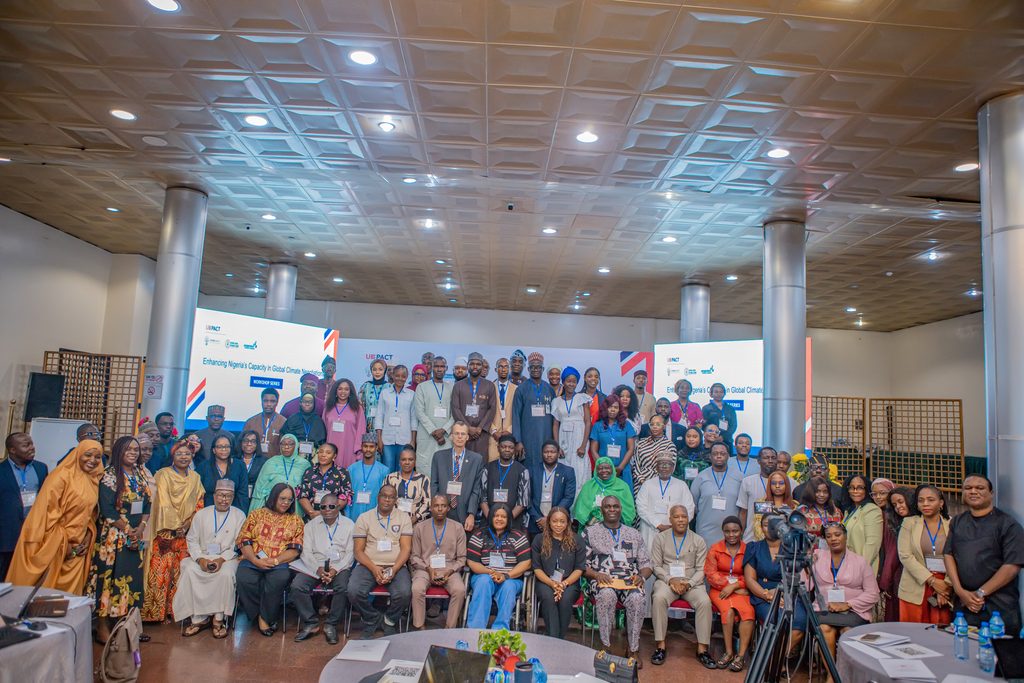
The most fun I had all day, and I mean this genuinely, was during the negotiation simulation. Reading about how climate negotiations work is one thing. Sitting down as the representative of a country bloc, trying to hold your ground while reading the room for what everyone else actually needs, is an entirely different sport. Every group at that table wanted what was best for its own bloc, understandably. Getting to an agreement anyway took patience, some strategic listening, and a willingness to give a little to get a little. It was messy. It was also the moment the whole workshop clicked for me.
Then the conversation turned to Nigeria, and the numbers landed differently once they were about home. Implementing Nigeria’s Nationally Determined Contributions (NDC 3.0) between 2026 and 2035 is projected to cost $ 337 billion. Eighty percent of that is expected to come from climate finance raised abroad. Sit with that for a second. It means the outcome of negotiations happening in rooms Nigeria may or may not have real influence in will directly decide how much progress the country can make on climate-resilient agriculture, water security, healthcare, and more.
Suddenly, showing up prepared to those negotiations stops being a diplomatic nicety and becomes something closer to a national necessity. And the backdrop makes it even more urgent. Public climate finance is shrinking. Loans are replacing grants at a worrying pace. The gap between what climate-vulnerable countries need and what is actually on offer keeps widening. None of that is a reason for developing countries to walk into negotiations underprepared. If anything, it is the exact opposite.
This is not a new story for CODE. Our own research has been tracking this gap for years. In our State of Climate Finance in Nigeria report, produced with Oxfam Nigeria and INKA Consult, we found that Nigeria received just 4.9 billion dollars for climate-related projects between 2015 and 2021, a fraction of what the country actually needs. Our 2025 Annual Report pushed that picture into sharper focus, putting Nigeria’s annual climate finance gap at 177.7 billion dollars and showing that three-quarters of the finance the country did receive came as loans rather than grants. Sitting in that workshop, watching those same dynamics play out in a simulation, made the research feel less like a set of statistics and more like a warning we had already written ourselves.

Here is where it got personal for the work we do at CODE. Negotiations set the ceiling on what states commit to. Accountability decides whether any of that commitment ever reaches the people who actually need it. The communities dealing with floods, the households facing food insecurity, the people whose lives are shaped by decisions made in rooms they will never enter, they have no seat at that table. Yet they carry the weight of whatever gets decided there. That gap is exactly where civil society organisations step in, working to hold the line between what governments promise on a global stage and what actually shows up on the ground, through transparency, tracking of climate financing, real citizen involvement, and keeping an eye on how resources are spent. It is the same principle behind our Follow The Money work, where community monitors track public funds in real time, and behind projects like our Interfaith Dialogue on Climate Change, which brings faith communities into local climate action rather than leaving the conversation entirely to negotiators in distant conference halls.
So preparing negotiators and building strong accountability systems are not two separate jobs. They are two halves of the same job, and if there is one thing I am walking away with, it is this. The real work does not start at the negotiating table. It starts long before, in understanding what is actually at stake, learning to speak the language negotiations run on, building coalitions that can hold under pressure, and quietly training the negotiators who will represent us next.
With COP31 on the horizon, investing in people might be one of the smartest bets we make on climate right now. Negotiating skills alone will not fix the climate crisis. But it just might be what stands between Nigeria getting the partnerships and outcomes it needs and watching global promises stay exactly that: promises. Because in the end, nobody is going to remember how polished the conference halls looked. What will actually count is whether the people back home, in the flood zones and the drought-hit farms, ever felt the difference.