
No Water, No Receipt: What a Water Board in Maiha Taught Me About Freedom of Information

By Abdulmalik Yahya, Programs Officer, Connected Development (CODE)

Last week, my friend Ahmad shared a message that has stayed with me. He had just registered a school in Maiha, a local government area in Adamawa State, Northeastern Nigeria, and his bank needed proof of address to open an account for it. So he went to the Maiha Water Board for a utility bill. This was the answer he got: “Maiha Water Board does not issue receipts because they are not pumping water to any resident. Water is fetched free at their premises only.”
We laughed. Then the laughter ran dry, much like the pipes. Ahmad looked for proof he was a customer. Instead, he found evidence that the Board no longer supplied water to residents.
Look closely, and the joke stops being funny. Ahmad did not file a Freedom of Information request. He did not need to know the law existed. He walked in for a receipt and walked out with a fact that should have been public long before: a water board that no longer supplies water to residents. He saw no announcement, no notice, and no public record explaining what happened, when, or what is being done about it. The truth slipped out by accident, through one man’s errand. That is how information travels at the grassroots in Nigeria: by chance, not by right.
Fifteen years after the Freedom of Information (FOI) Act was signed, the machinery meant to make it work is still missing. Data from the FOI Unit of the Federal Ministry of Justice consistently show that fewer than 20 percent of public institutions have designated FOI desk officers, and that is counting federal institutions alone. If the federal level looks like this, picture a water board in Maiha. Yet the law reaches it too. On 11 April 2025, the Supreme Court ruled in a case brought by civil society groups against the Edo State Agency for the Control of AIDS that the FOI Act binds all 36 states and their agencies, not only federal ministries, departments and agencies. The old excuse is gone, yet journalists and civil society groups meeting in Enugu in February 2026 observed that several state governments still resist implementing the Act. What remains is the work: state and local institutions must designate FOI officers, publish their contacts, and disclose, without waiting to be asked, the basic facts about the services they are paid to deliver. If Maiha Water Board had pinned that one sentence on its gate, Ahmad would have saved himself a trip.
Maiha was not the only place where I encountered this silence. I have seen the same problem in my work on public health financing, where the stakes extend beyond access to basic services to the government’s ability to prepare for and respond to disease outbreaks.
Under Project Track-BHCPF, a Global Health Advocacy Incubator Capstone project, we tracked funds released through the NCDC Gateway of the Basic Health Care Provision Fund, the only channel within the Fund that directly supports disease surveillance, outbreak response, laboratory systems, and emergency coordination. I sent three FOI requests asking how much of that money was disbursed to states between 2024 and 2025, how the funds were utilised, and the mechanisms used in sharing the fund. This is money meant to help states detect and respond to outbreaks before they become emergencies.
Section 4 of the FOI Act gives an institution seven days to release information or explain in writing why it will not. Only one institution responded, and to their credit, the data they shared was usable. The other two gave us something louder than a refusal: silence.
Silence is harder to fight than a “no.” A written denial can be challenged. Silence is a door that neither opens nor locks. When an institution doesn’t respond, the consequences go beyond a missed deadline. Citizens cannot verify whether public money reached its intended destination, journalists cannot test official claims against records, and civil society organisations lose valuable time pursuing information that should already be accessible. The burden shifts from the institution responsible for keeping the records to the citizen trying to obtain them.
The law says we can go to court, but anyone who has priced litigation in Nigeria knows justice does not come cheap: filing fees, legal fees and adjournments that stretch into years. For a civil society organisation, and even more for someone like Ahmad, the cost of forcing an agency to answer can outweigh the value of the answer. A right that only the wealthy can enforce is hardly a right. Citizens need an accessible administrative appeal process that lets them challenge non-response without first hiring a lawyer.
The only response I got was the exception, not the rule. According to an official cited by The Guardian in 2025, only 91 of roughly 800 public institutions have complied with the FOI Act. A joint report by the International Press Centre (IPC), Centre for Media and Society (CEMESO) and Media Rights Agenda (MRA) found that between 2023 and 2025, only 9 to 13 institutions set aside any funds for FOI activities. A law without a budget is a promise without a purse. Until every public institution has a budget line for FOI, a trained desk officer and proper records, compliance will depend on the goodwill of whoever sits at the desk that day.

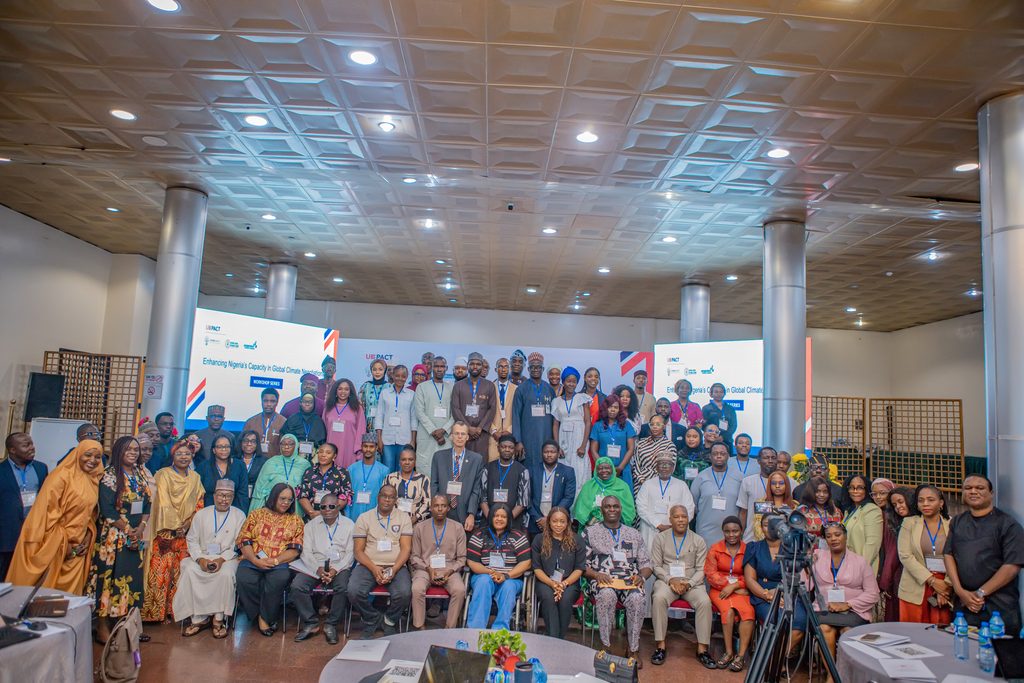
I carried these frustrations to the National Access to Information Summit 2026, where I represented Connected Development as a panellist. The Federal Ministry of Justice organised the summit, with support from the Rule of Law and Anti-Corruption (RoLAC II) Programme and International IDEA. My submission was that strengthening compliance must begin with an independent FOI commission, an oversight body with sanctioning power, alongside real investment in public institutions’ capacity to meet their obligations. The current oversight arrangement also raises questions about independence. The IPC, CEMESO, and MRA report notes that the Attorney-General’s office, the supposed oversight body, sometimes defends institutions that fail to comply with the FOI Act in court rather than holding them accountable.
An independent FOI commission should have a clear statutory mandate to receive complaints, order the release of information where legally appropriate, monitor statutory response deadlines, and enforce compliance within powers conferred by law. Citizens should be able to challenge non-response through a simple, affordable administrative process without first having to hire a lawyer. The commission should also publish regular compliance reports showing which institutions respond, which default, and what corrective action follows.
Ahmad’s school will find another way to prove its address. Nigerians are resourceful like that. But we should not have to be resourceful to get what the law already owes us. In Maiha, people fetch water for free at the Board’s premises. Information should flow the same way: free, available at the source, and collected without a fight. When public offices go quiet, researchers are not the only ones who lose. The community doesn’t know why its taps have run dry, and the state can’t prepare for the next outbreak because citizens cannot follow the money meant for surveillance.
Transparency should not be a pipe dream. Nigeria needs public institutions that disclose the status of their services, account for the money entrusted to them, and answer legitimate requests for information within the time the law allows. The next Ahmad who knocks on a public office door should leave with an answer, not an excuse.